How to match cable lugs to conductor cross-section, stud size, conductor material, crimp tooling and installation conditions.
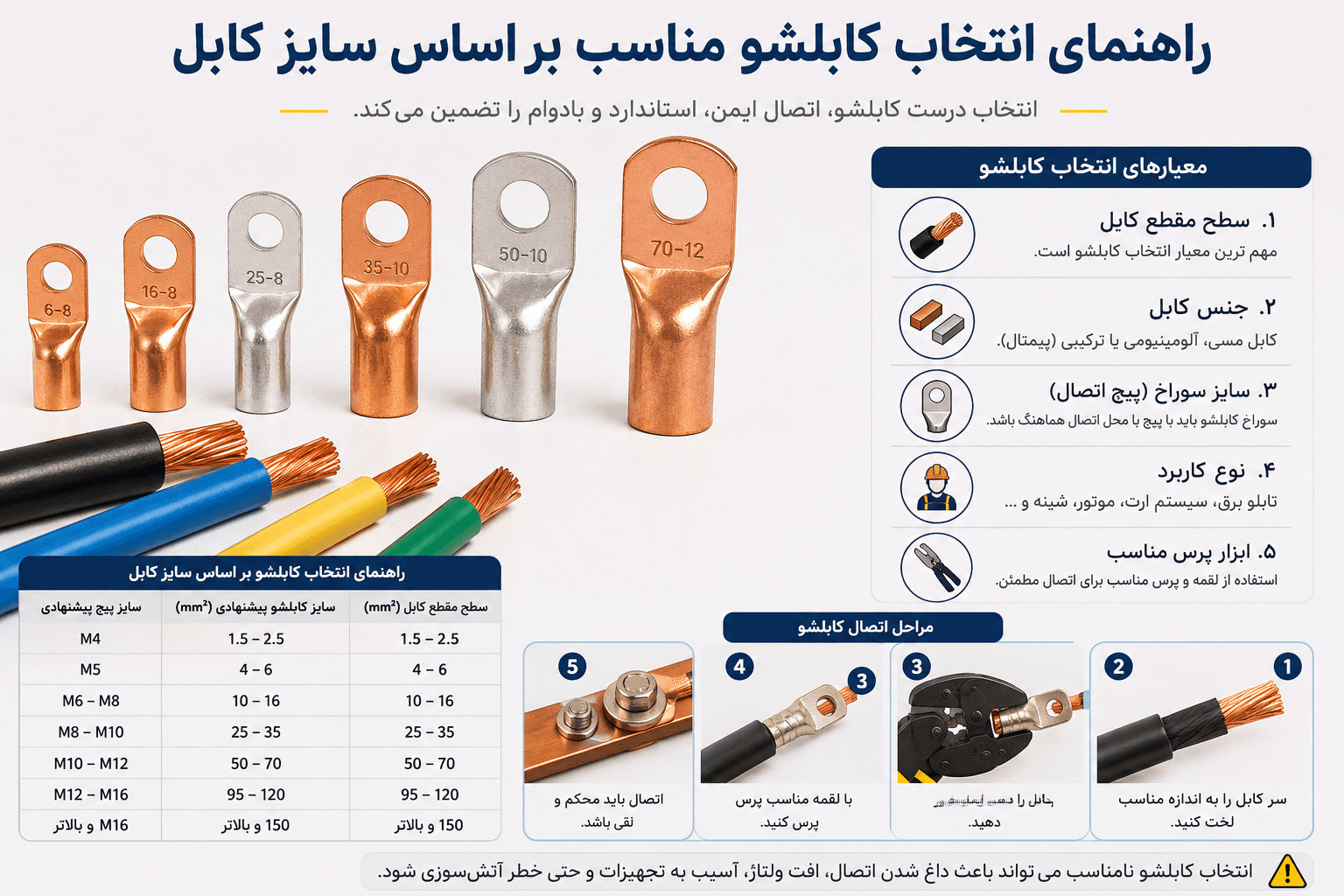
A cable lug must match the conductor material, construction and nominal cross-sectional area. A lug that is too large may not compress correctly; one that is too small can damage strands or prevent full insertion. Check whether the conductor is copper or aluminium and use a compatible lug.
The palm must fit the terminal surface and the hole must match the stud without excessive clearance. Verify that the palm can sit flat and that adjacent lugs, covers and barriers still have enough space.
Select the die profile and size recommended for the lug. Mixing an unverified die and lug can produce a joint that looks acceptable but has high resistance or poor pull-out strength. Keep tools calibrated, place the crimp in the specified position and complete the required number of compressions.
Strip only the required insulation length without cutting conductor strands. Insert the conductor fully, crimp, and inspect the finished joint for cracks, flash, incomplete compression and exposed strands. Apply suitable heat-shrink or insulation where needed, while keeping the contact surface clean.
Correctly matched lugs and tooling reduce heat, voltage drop and maintenance risk in power connections.
Explore KFG Power industrial products and choose the right components for your project.
 Tutorials
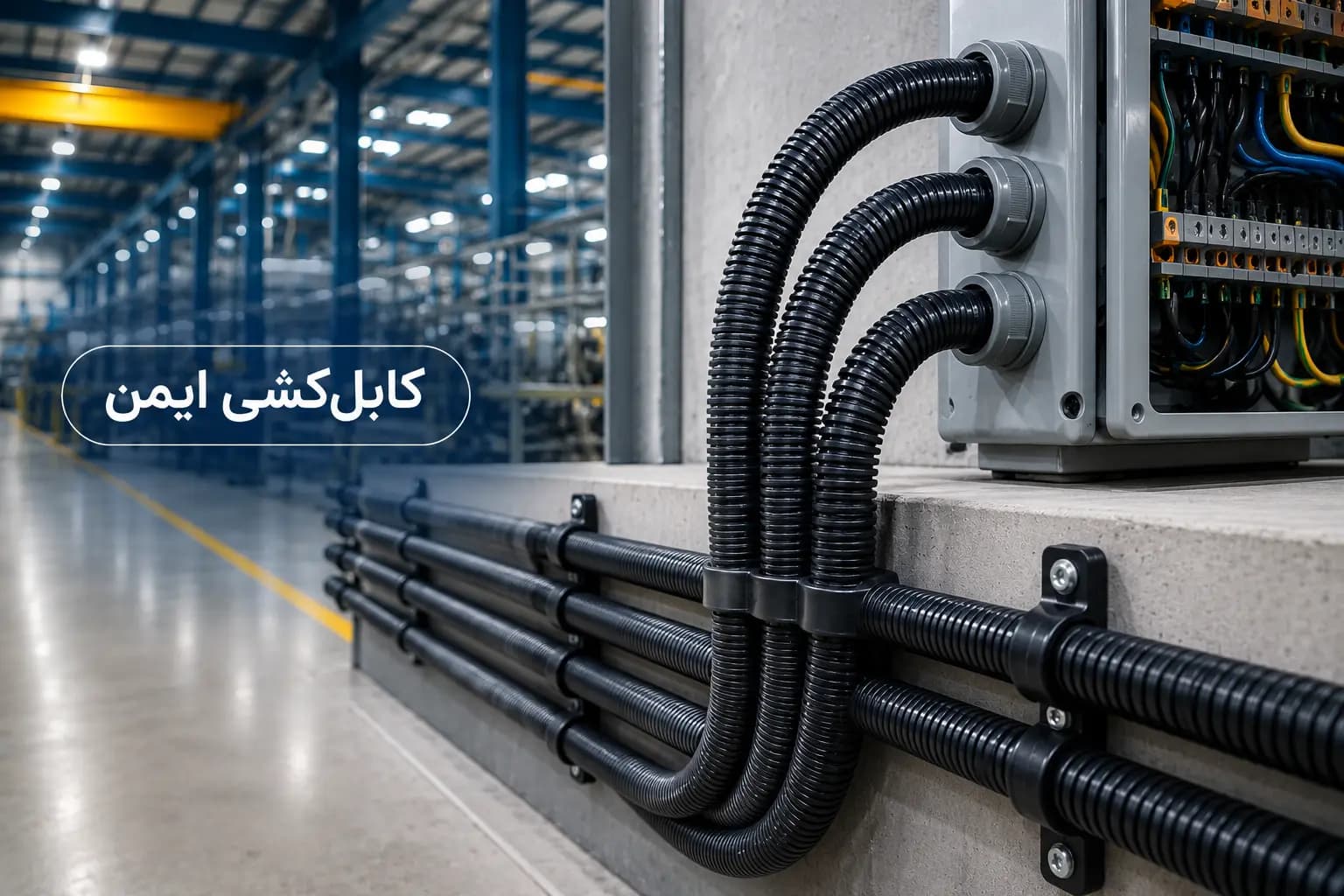
A field-focused installation sequence for routing and protecting industrial wiring with flexible polyamide conduit.
July 20, 2026 Tutorials
Key criteria for selecting cylinders, valves, fittings, tubing, filters and pressure-control components for industrial pneumatic systems.
June 25, 2026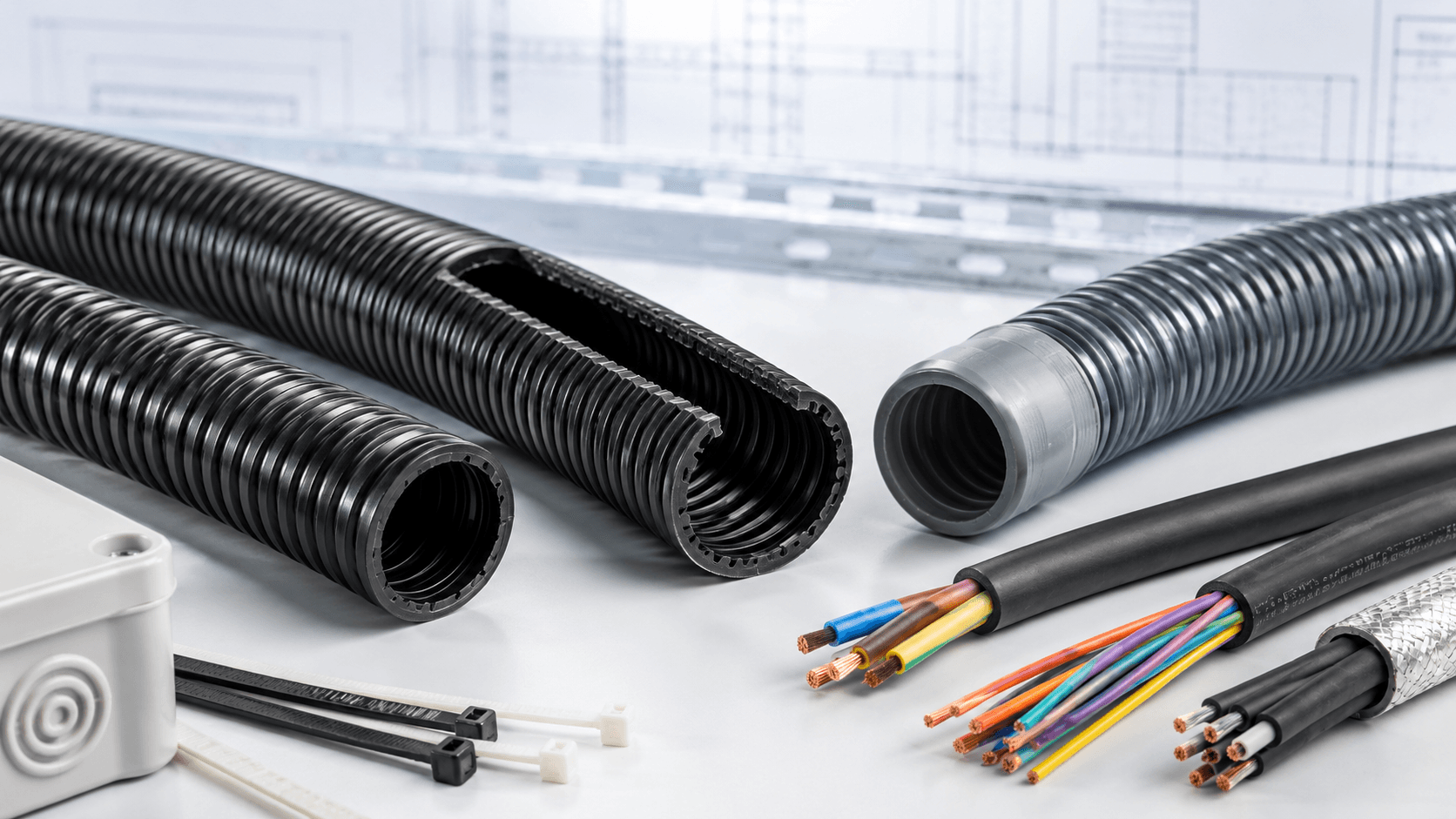 Tutorials
Compare PP, PE, polyamide, split and coated flexible conduits by environment, movement, cable load and installation method.
June 25, 2026