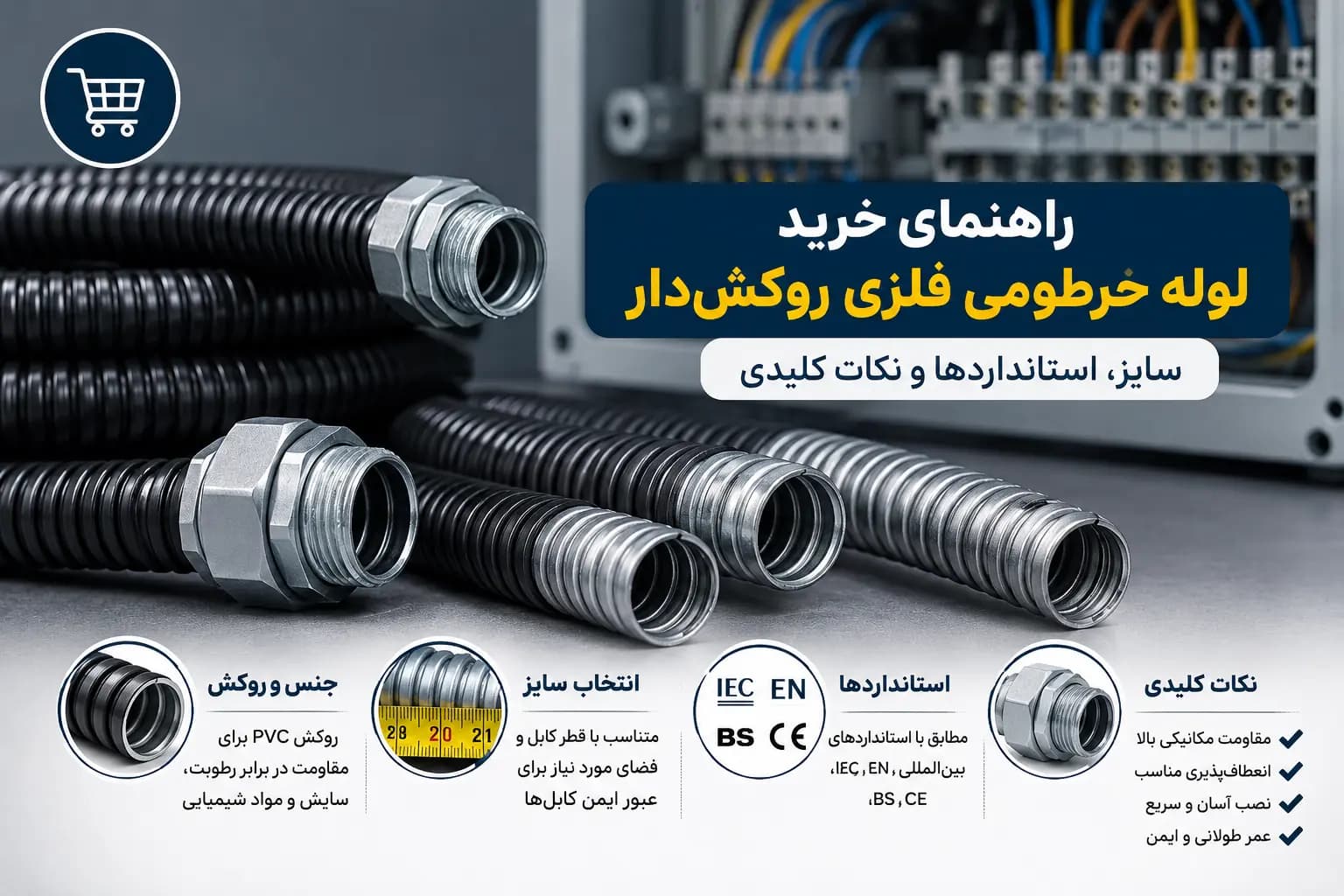
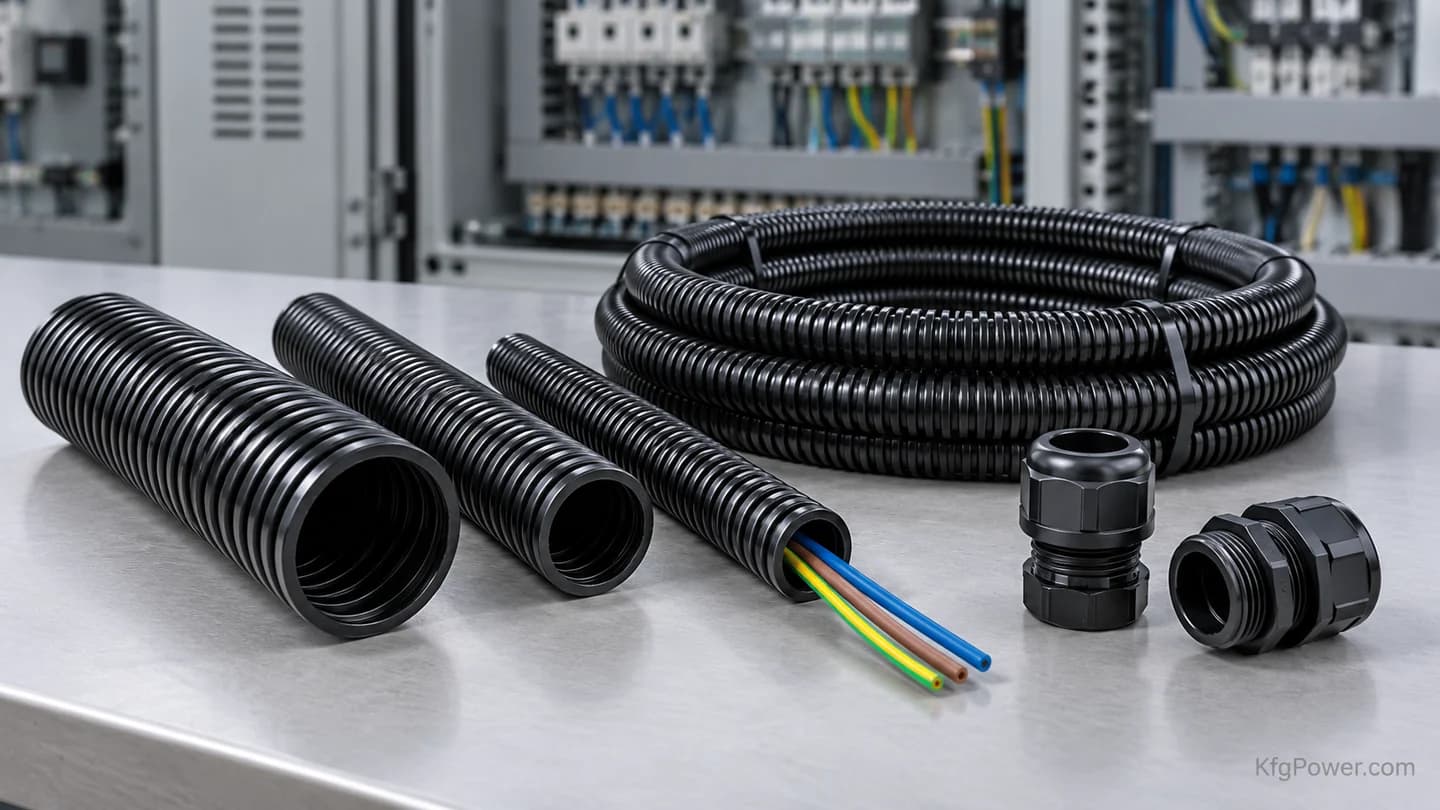
Industrial cables can be exposed to abrasion, sharp edges, movement and environmental contamination. Corrugated conduit provides a separate protective route around the cable bundle and helps keep wiring organised and accessible for maintenance. Choosing the correct system means considering the conduit and its fittings together.
Start with the installation conditions
Identify whether the route is inside a control panel, along a machine frame or near moving equipment. Consider the required flexibility, potential mechanical contact, temperature and any exposure to moisture, oil or chemicals. No single conduit material is suitable for every environment.
Compare material and construction
Polymeric corrugated conduits and coated metal conduits have different mechanical and environmental characteristics. Select a product using its actual technical specification rather than assuming that appearance, colour or material name establishes a particular level of protection. For a moving route, check the permitted bend radius and the suitability of the conduit for repeated movement.
Choose an appropriate size
The conduit must accommodate the cable bundle without forcing cables into an unsuitable bend or making installation and later maintenance unnecessarily difficult. Check the internal diameter and the outside diameter required by the matching connector. A nominal size is not a substitute for the dimensioned product specification.
- Measure or calculate the intended cable bundle.
- Check the cable and conduit bend-radius requirements.
- Allow for the selected connectors and entry arrangement.
- Keep power and signal routing consistent with the equipment design.
Use compatible fittings
A conduit route includes its connectors, mounting clips and equipment entry points. Match the fitting to the conduit profile and dimensions. Where protection against dust or water is required, verify the rating of the documented assembled system, including seals and the enclosure connection.
Installation and maintenance
Cut the conduit cleanly and remove sharp edges where applicable. Support the route so that cable weight and machine movement do not place unintended loads on the entry fittings. Inspect the installed route for crushing, excessive bending and rubbing against nearby parts.
Information to provide when ordering
Specify the environment, route dimensions, cable bundle, required flexibility and connection type. KFG Power's conduit and fitting categories can help you compare the available options before confirming a model for the application.