A practical guide to conduit size, coating, fittings, bend radius and installation requirements for PVC-coated flexible metal conduit.
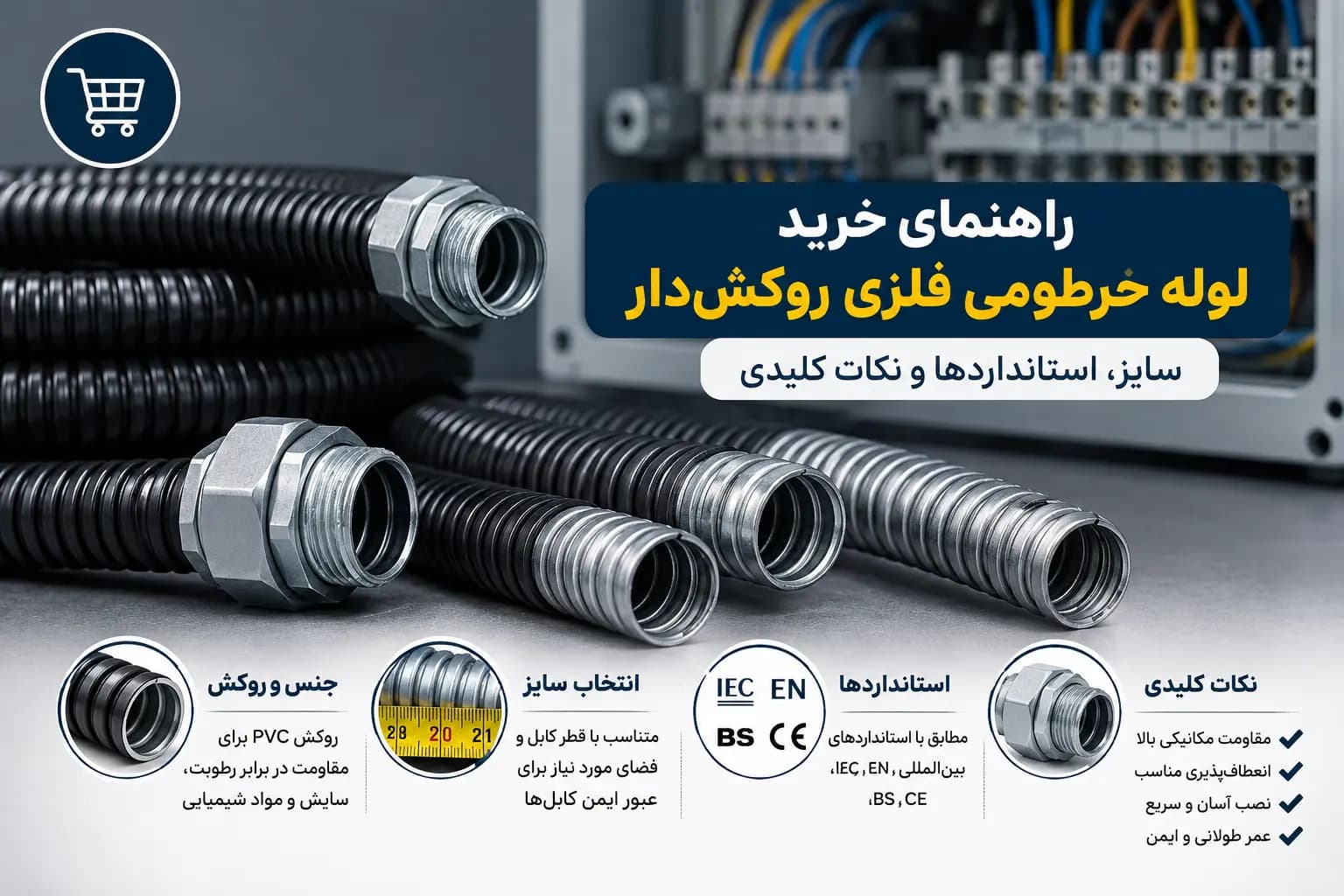
This conduit combines a helically wound metal core with a protective polymer coating. The metal layer provides crush and impact resistance, while the coating improves resistance to moisture, dust and surface contamination. It is commonly used between machinery, motors, control panels and fixed cable routes where vibration or movement makes rigid conduit impractical.
Start with the outside diameters and quantity of the cables, then apply the permitted conduit fill for the relevant standard. Do not select a conduit only by nominal cable size. Adequate free space makes cable pulling easier, reduces heat accumulation and prevents damage at bends.
Review the operating temperature, UV exposure, oil resistance and flame behaviour stated by the manufacturer. For outdoor or wet areas, use compatible liquid-resistant fittings and make sure cut ends do not leave the metal core exposed to corrosion.
The gland or connector must match the conduit's actual outside diameter and construction. Follow the minimum bend radius, avoid sharp changes of direction and support the conduit so its weight is not carried by the fitting. Leave enough length for expected machine vibration without creating loops that can be snagged.
For size selection and compatible accessories, send KFG Power the cable schedule and installation conditions.
Explore KFG Power industrial products and choose the right components for your project.