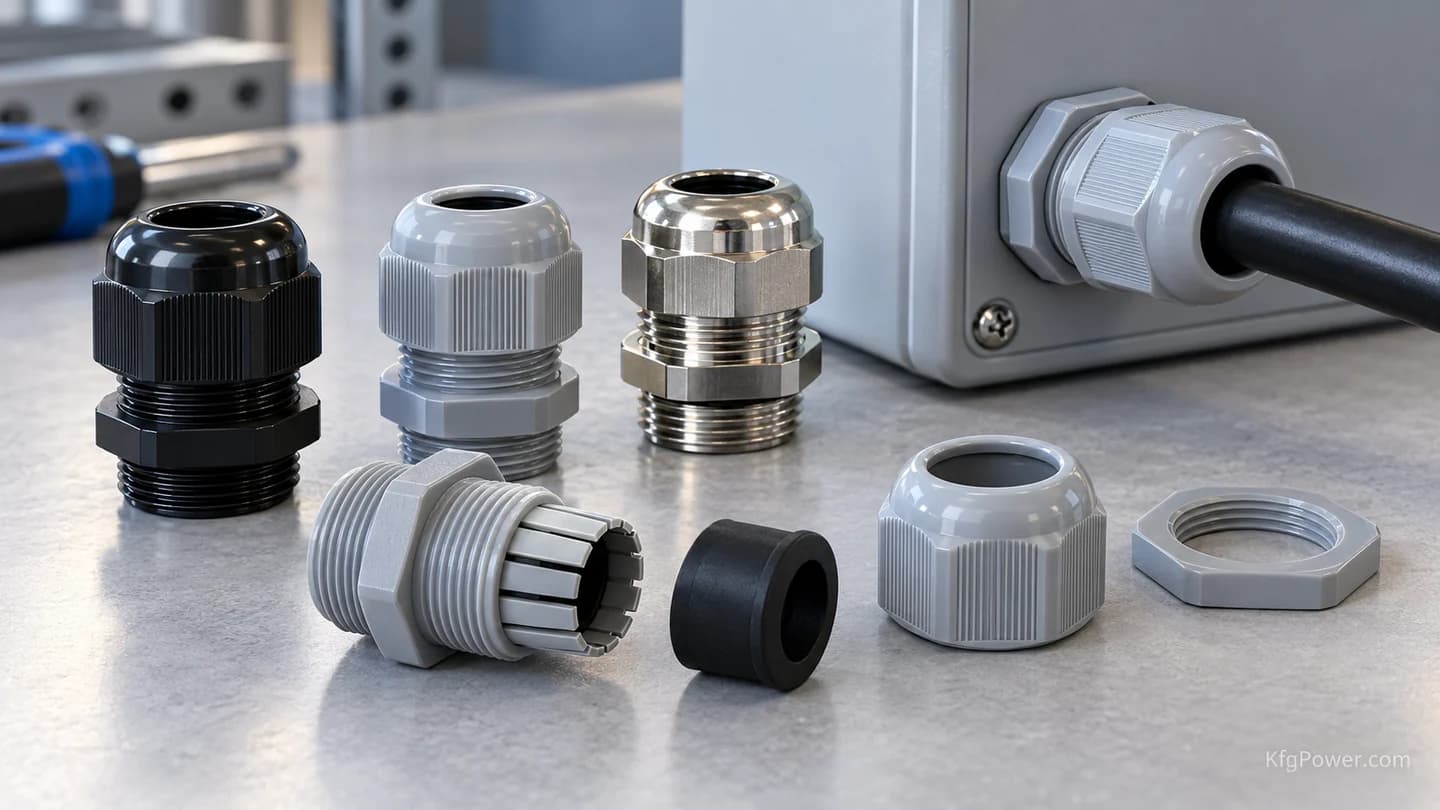
A cable gland provides a controlled entry for a cable into a panel, junction box, motor or other enclosure. Depending on its design, it supports the cable, helps manage strain at the entry and contributes to the sealing arrangement. Not every gland is waterproof or suitable for every cable.
What to check before choosing a gland
Measure the cable's outside diameter and identify the enclosure entry. The gland's stated clamping range must accommodate that cable, while the mounting thread or hole must suit the enclosure. The conductor cross-section alone does not determine the required gland size.
- Cable outside diameter and gland clamping range
- Enclosure thread standard and entry dimensions
- Material and environmental compatibility
- Required seals, locknut and installation arrangement
Metric and PG are thread designations
Metric and PG describe different mounting thread systems. They should not be treated as interchangeable simply because two glands appear close in diameter. Confirm the exact thread designation against the enclosure or adapter specification before selecting a replacement.
Plastic and metal gland construction
Material selection depends on the installation. Plastic glands are widely used in suitable panel and equipment entries, while metal designs may be selected for other mechanical or environmental requirements. The actual specification of the chosen model matters more than a broad assumption about its material.
Sealing depends on the product and assembly
Where dust or water protection is required, check the documented rating and installation conditions for the exact gland. Cable diameter, sealing elements and the enclosure interface must all be suitable. Do not infer a protection rating from the words plastic, metal, metric or PG.
Installation checks
Install the gland without damaging the cable sheath. Fit the required seals and retaining parts and tighten according to the manufacturer's instructions. Confirm that the cable is retained and that its route does not transmit unintended pulling or bending loads to the internal terminals.
Ordering the correct component
Provide the cable outside diameter, entry dimensions, thread designation and installation environment. Browse the KFG Power cable-gland category and confirm the clamping range and fittings of the exact model before ordering.