How to choose cable conduit materials, fittings and ingress protection for corrosive, chemical and continuously wet industrial locations.
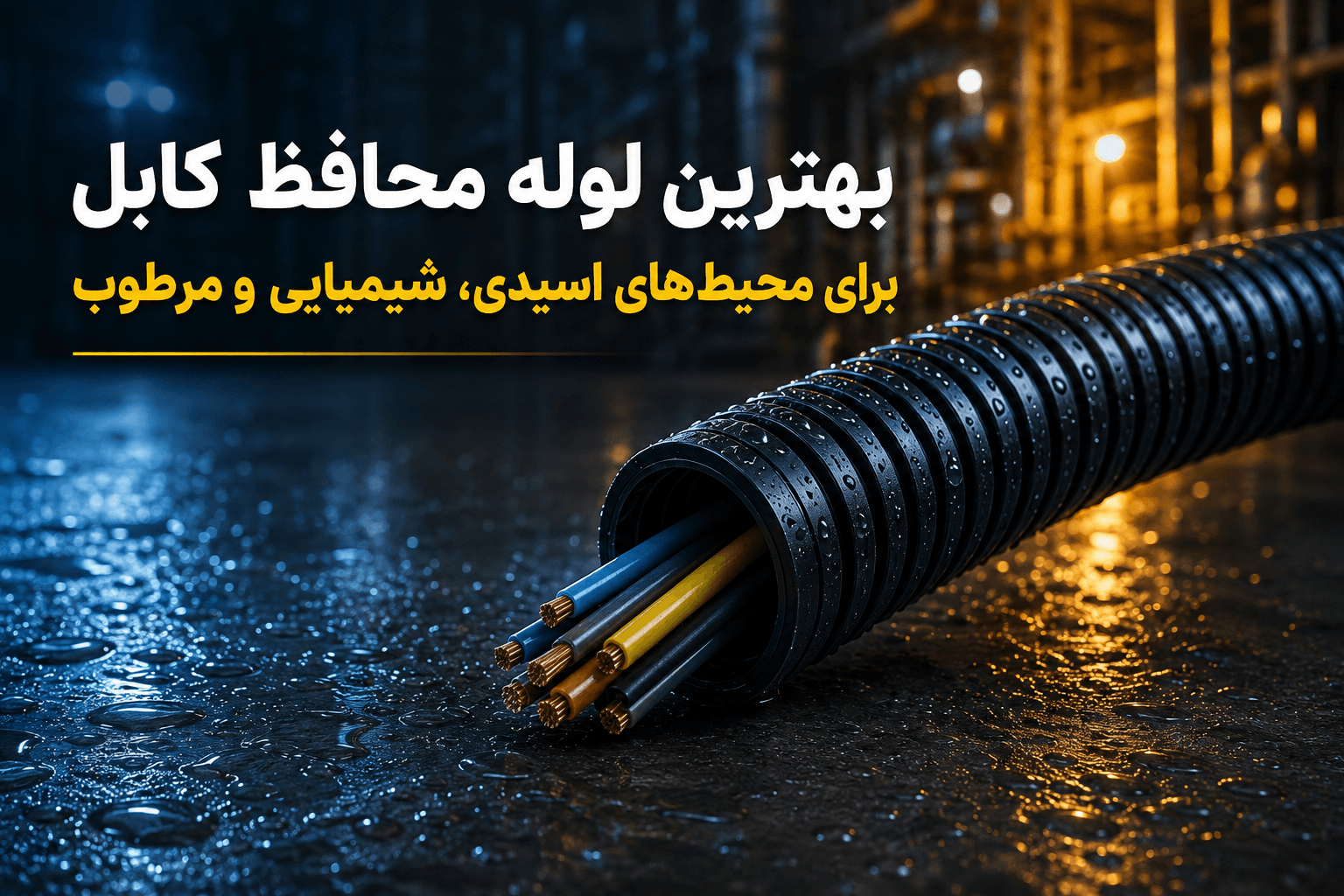
Acids, cleaning chemicals, salt, condensation and standing water can damage a cable-protection system long before the cable itself reaches its expected service life. The correct choice therefore depends on the complete system: conduit material, fittings, seals, installation method and inspection schedule.
Polypropylene and polyamide conduits are widely used because they resist many industrial chemicals and do not corrode like unprotected metal. PVC-coated flexible metal conduit adds high mechanical strength, but the coating and exposed metal at cut ends must be compatible with the chemicals on site. Always check the manufacturer's resistance data against the exact chemical, concentration and operating temperature.
Select glands and fittings with an ingress-protection rating appropriate to the enclosure and wash-down conditions. A high rating only applies when components are correctly sized, tightened and installed on a suitable surface. Use compatible sealing washers, avoid low points where liquid can collect, and provide drainage where condensation is unavoidable.
KFG Power can help compare conduit and gland options for the mechanical load, chemical exposure and required level of sealing in your project.
Explore KFG Power industrial products and choose the right components for your project.